Showing posts with label Elliott Building. Show all posts

Blue Light Special

Photos are from 2005-2006; some are scanned from 35mm prints.

The Woodward Building was one of the better of the various abandoned buildings of Merchants' Row that I've explored. And despite the fact that you can't always access every single building in a block by roof-hopping, thankfully not all of them require acrobatics either—sometimes a good swift Fonzarellian karate-chop is all that is needed to suave a door open. Being able to recognize those particular portals is something else however.


The uninspiringly-named eight-story Woodward Building at 1449 Woodward was yet another Albert Kahn design, completed in 1915. Unlike most of the buildings downtown, this shiny white terra cotta nugget somehow dodged the 1950s bullet and still retains its original cornice line.
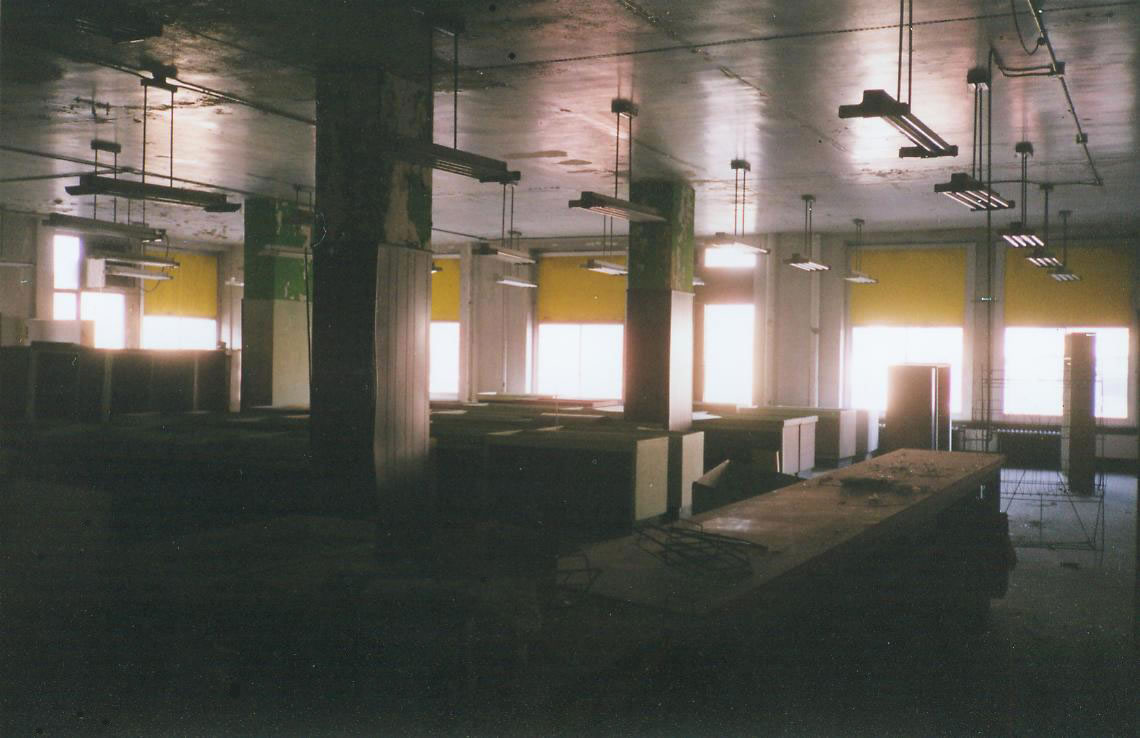

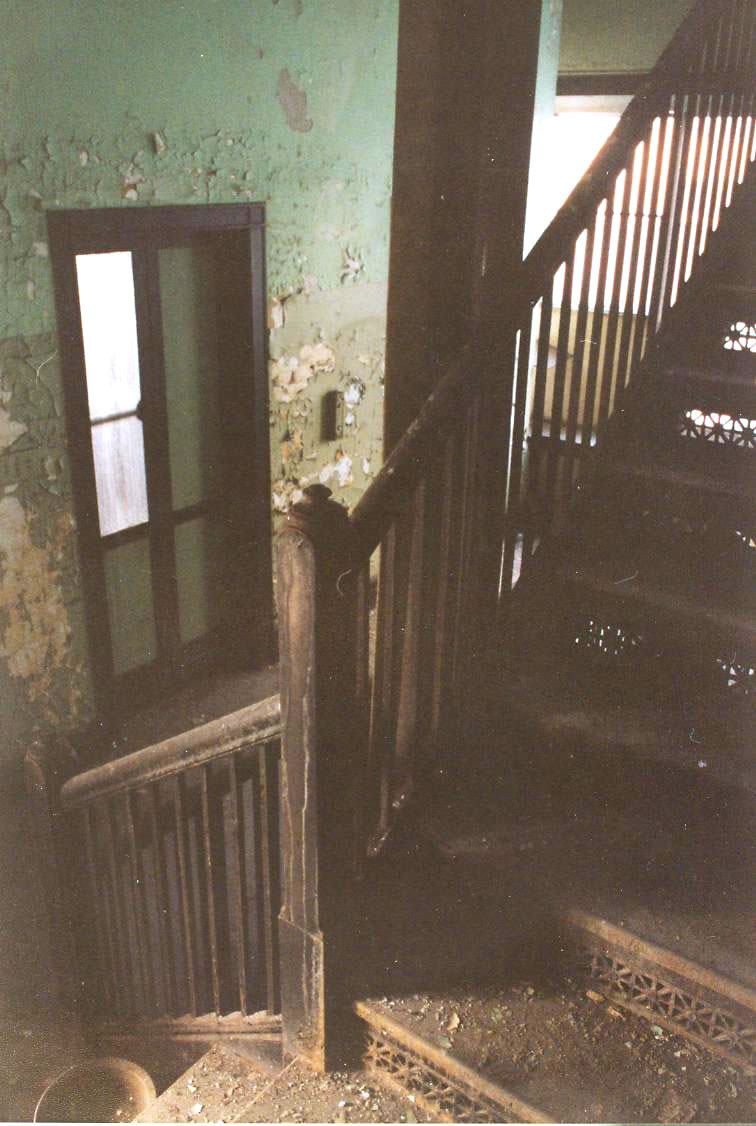
It was owned by Jacob Siegel, local "women's clothing mogul," and the ever-expanding Kresge's had space on the first floor. They renovated in 1932. Looks like Uncle Albert kept the same staircase design he used in the Fisher Arcade:
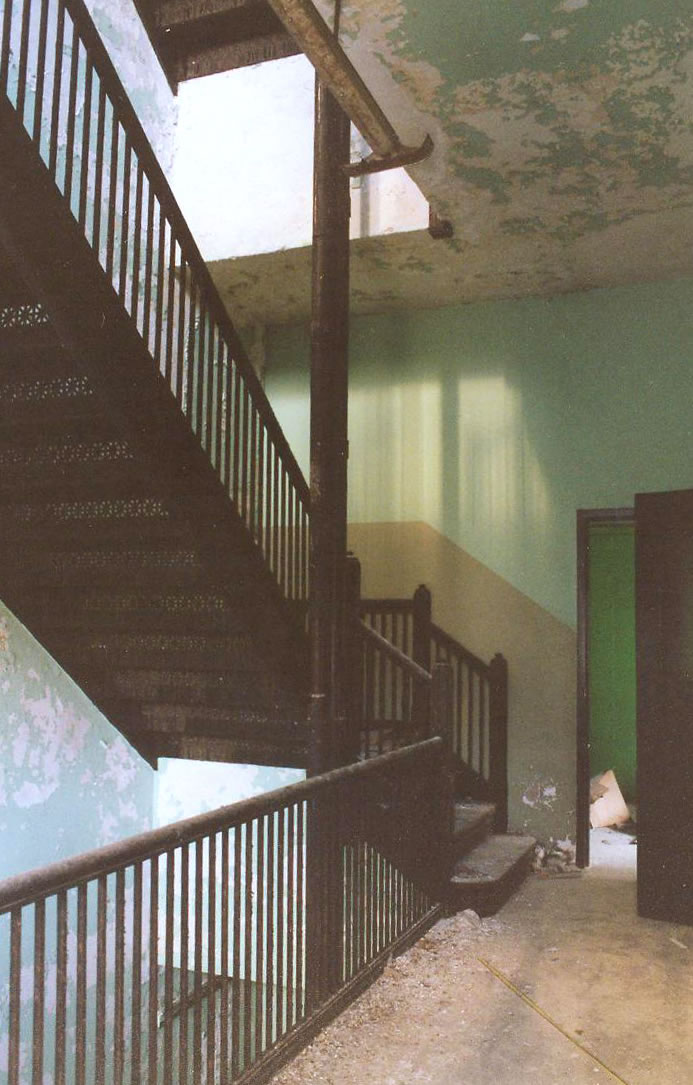

Detroitblog John was quite often my partner back then, and this "entrance" was one that I believe he arranged. We found the buildings of this block to be just as relatively untouched as the rest of Merchants' Row.

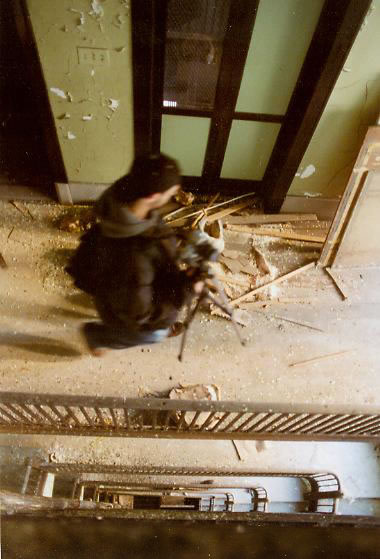
 

Thankfully, accessing the Woodward Building's roof also gave access to the rest of the block's rooftops as well, almost all the way down to the Elliott Building at Grand River Avenue. The only problem was that once you got to the roof of the Valpey Building, the drop down to the roof of the Elliott Building was too far to jump; we would have to figure out something else for that one. The two buildings in the middle were actually already renovated as lofts.
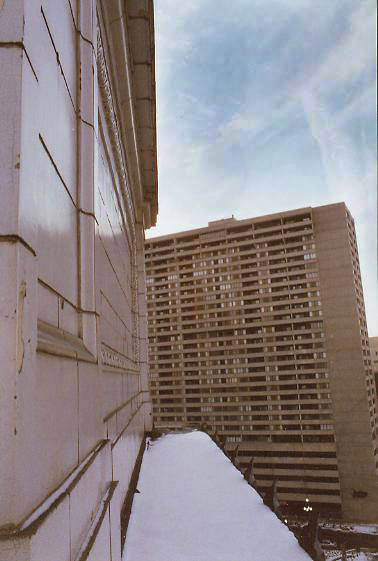

God damn it was f%$#ing cold that day. Here are the Ferguson, and Kaiser-Blair Buildings across the street:
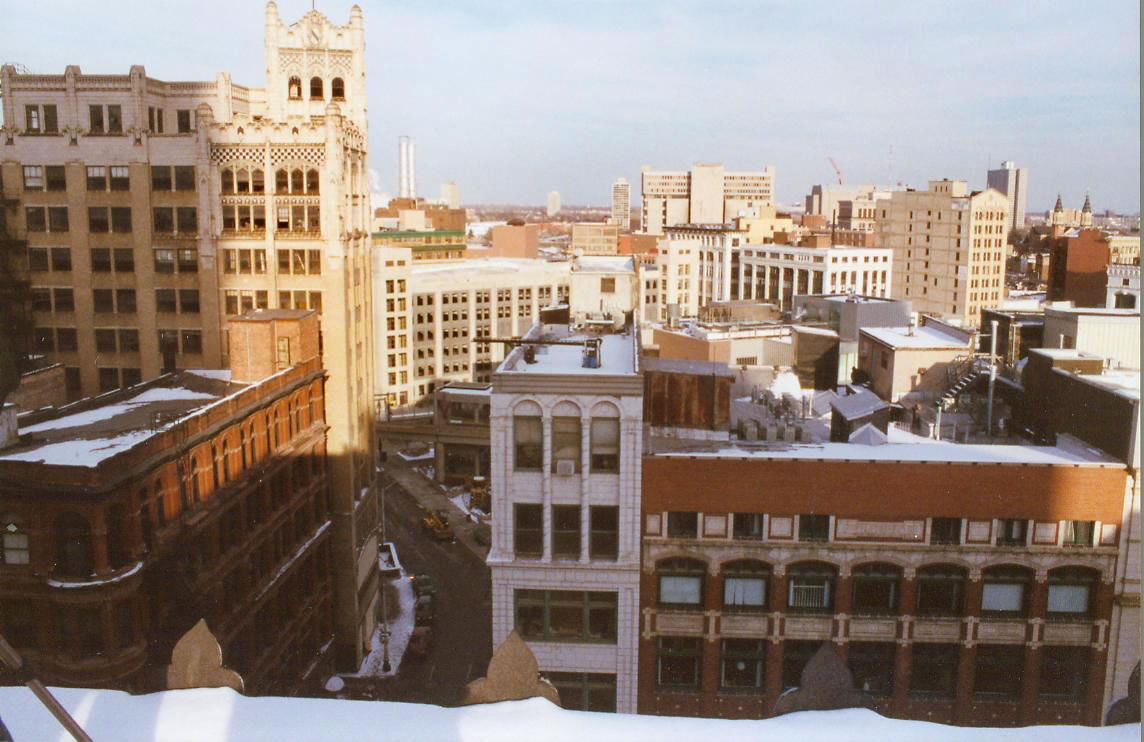

Here's a view of the Woodward Building from the roof of the Pierson Building:


Walking across the tops of the buildings on this block, we were able to access the Valpey Building again, which had shed its PEPPER'S SHOES facade cladding in favor of a few new windows—the product of a doomed renovation attempt:
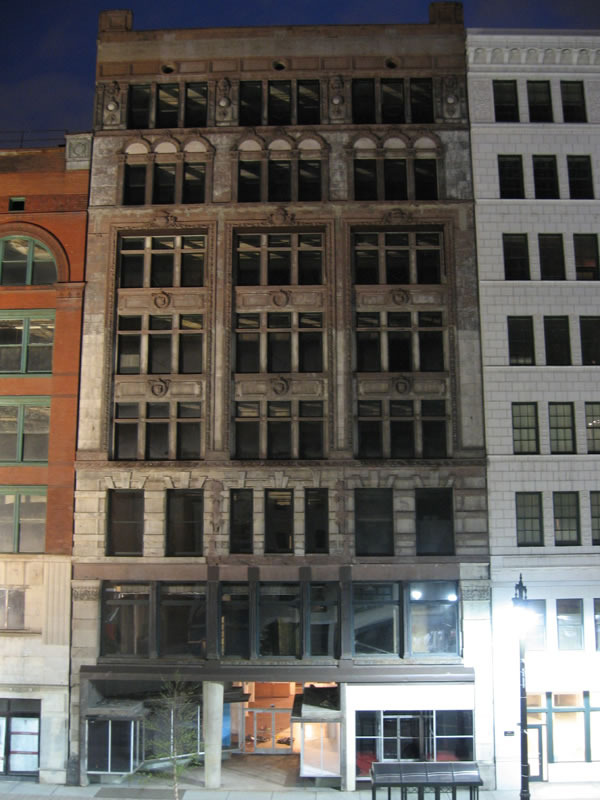

To our disappointment, there were no pass-through floors between the Valpey Building and the Elliott Building either.
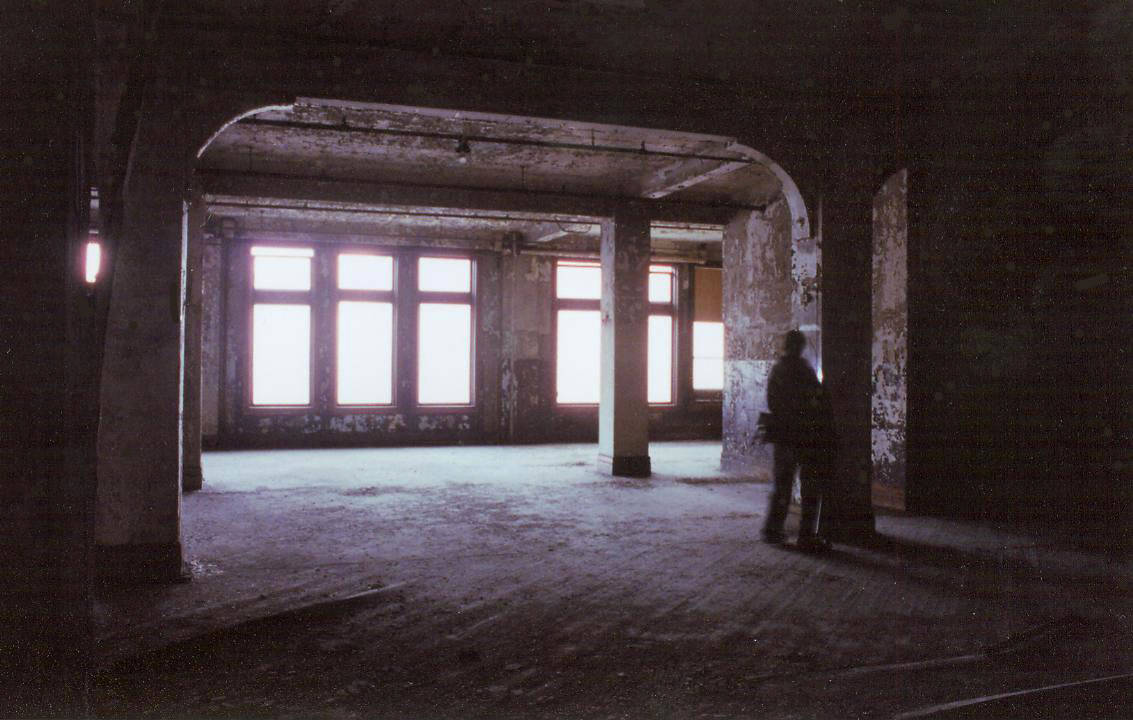

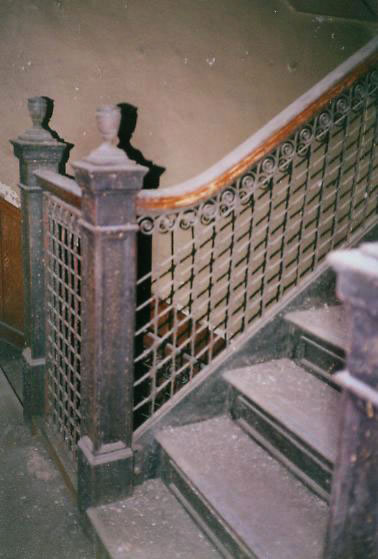
The Valpey Building was built in 1896, and designed by Donaldson & Meier, the same local architects who gave us the Stott Building and First Unitarian Church. The radiators in here were pretty snazzy-lookin...the stairs however were definitely 1896 though:
 

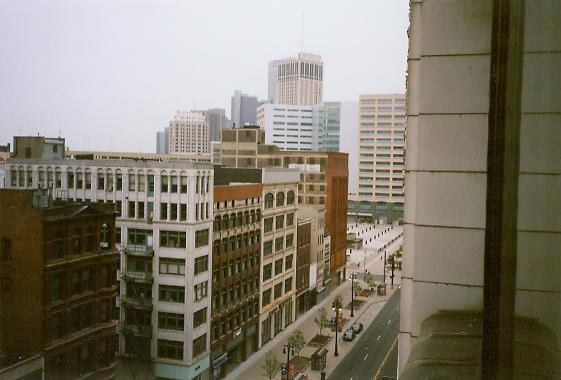
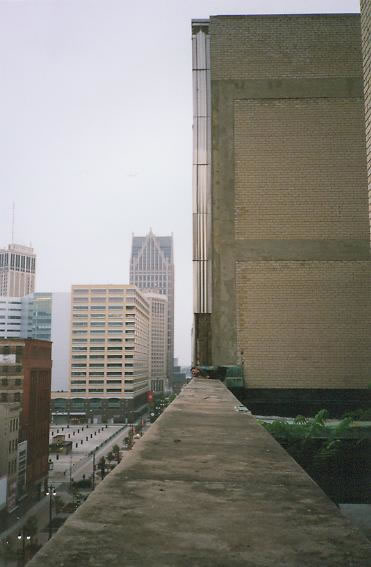
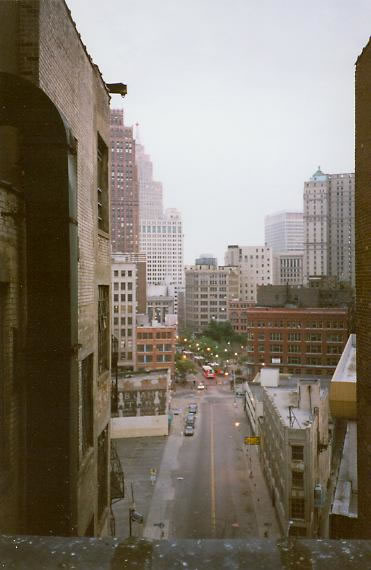
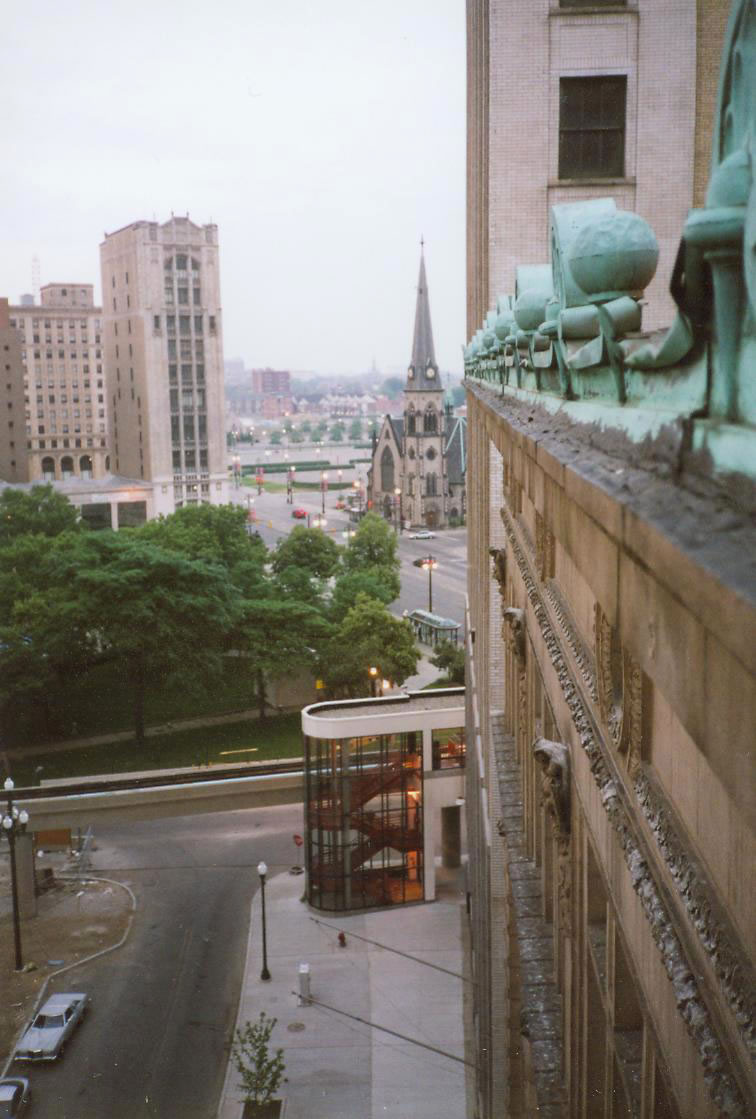
The place was clean and swept out...I hoped that renovation would be soon, but sadly this was not to be for at least another decade. The view from the roof showed a glimpse into Capitol Park and a similarly stalled-out Book-Cadillac renovation:


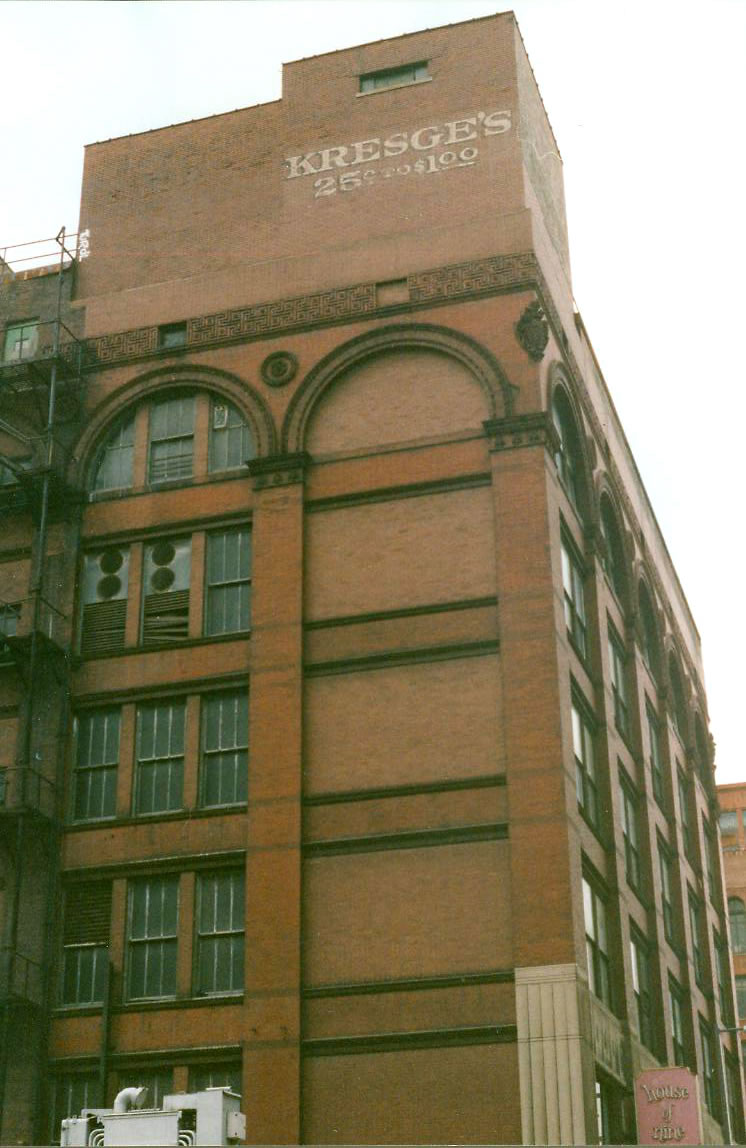
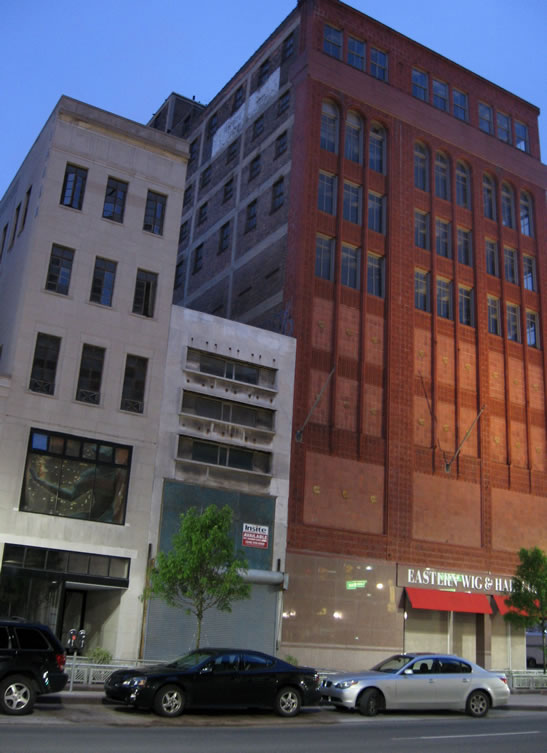
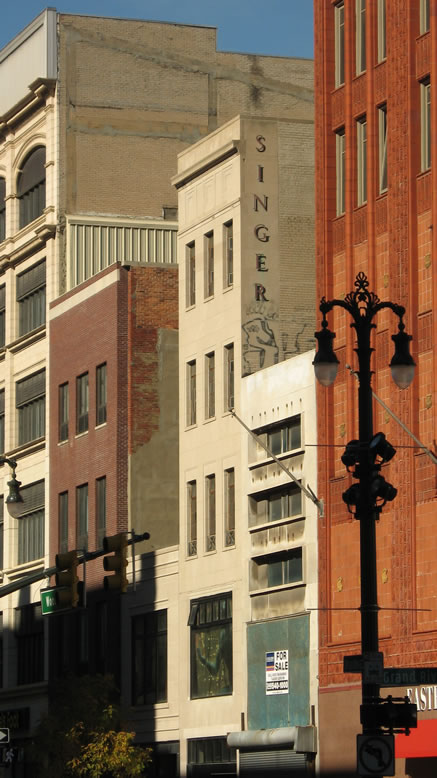
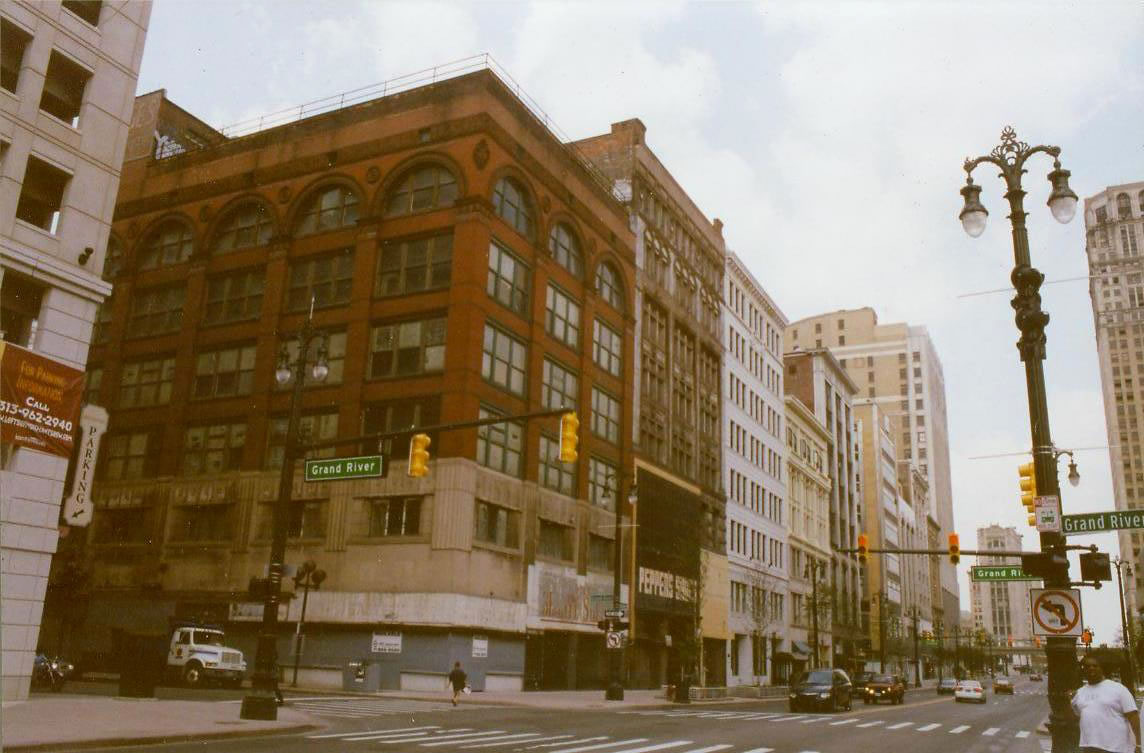
A week or so later, we were finally able to heft ourselves up and into the Elliott Building...viewed (at left) from the Singer Building across the street:
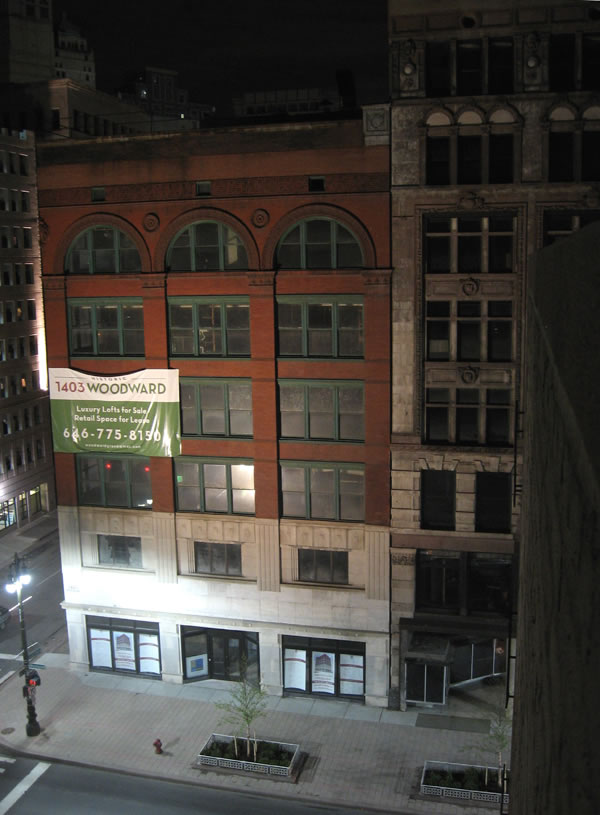
 

The older photo on the right shows the old "House of Nine" sign on the Grand River facade, and an even older paint ad near the roof that advertises Kresge's dollar-store status. It was here that the K-Mart Corporation got its start. By this point the c.1894 Elliott Building was trying to get its own ill-fated renovation started as well, as you can see by the banner in the photo on the left.
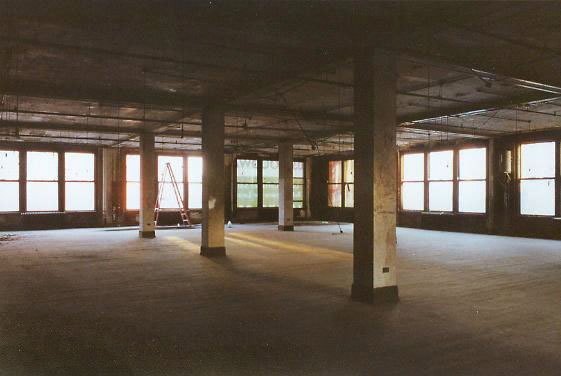

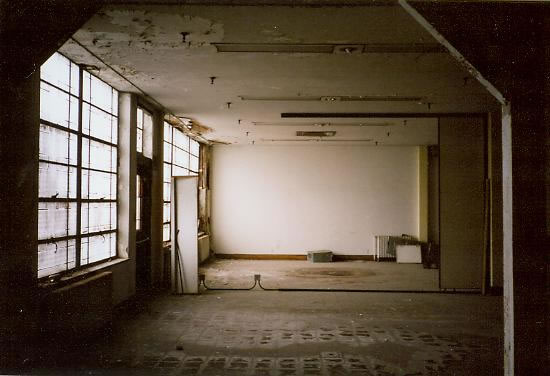
Once again, interiors were swept pretty clean, in preparation for luxury lofts or whatever crap someone was trying to put in there. As with the rest of the infrequently-infiltrated buildings of Merchants' Row, the fixtures and interiors here were basically untouched by the hammer and the crowbar; I hoped that whatever renovation came would not be the typical drywall & marble countertop junk, but instead retain some semblance of originality.

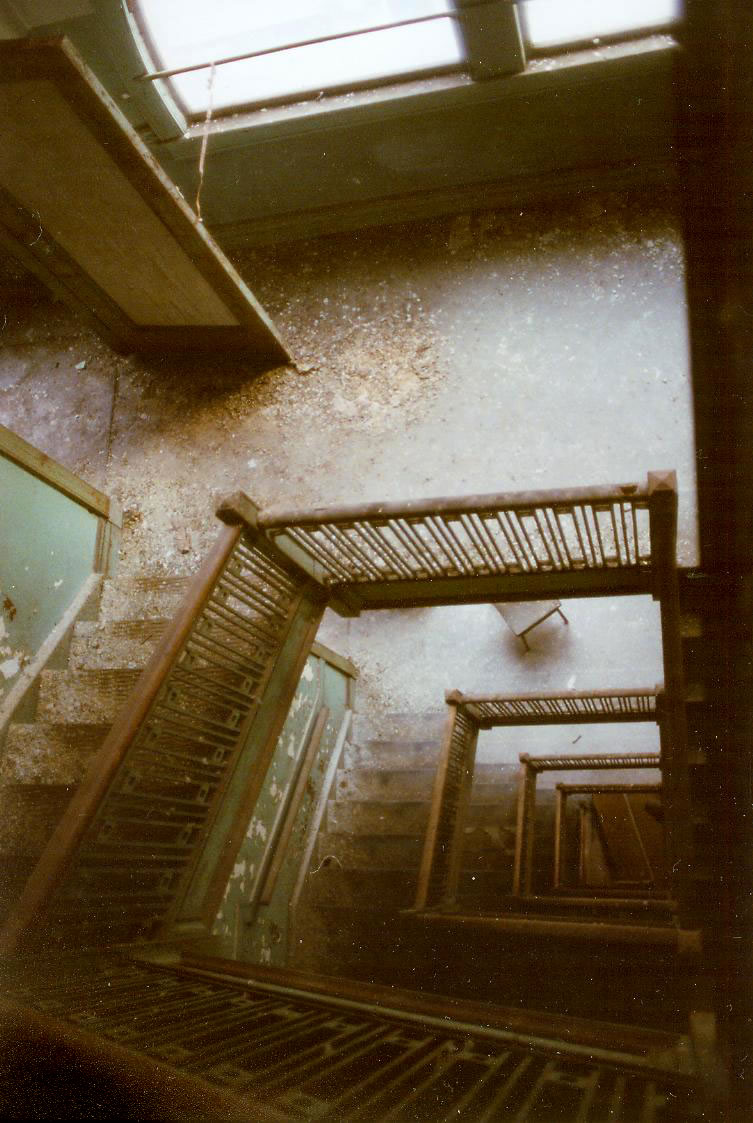
The stairs in here were pretty damn swank too:


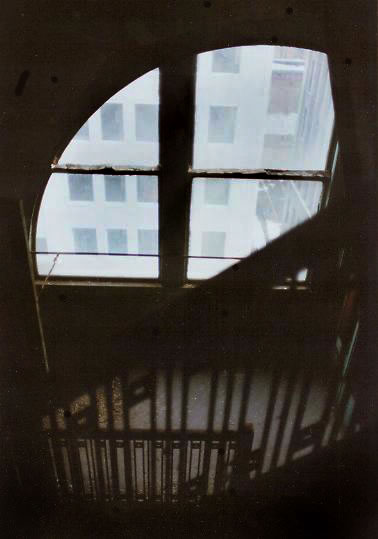
The huge lunette windows of the top floor were what I had come for...mmmmmm, yummy.
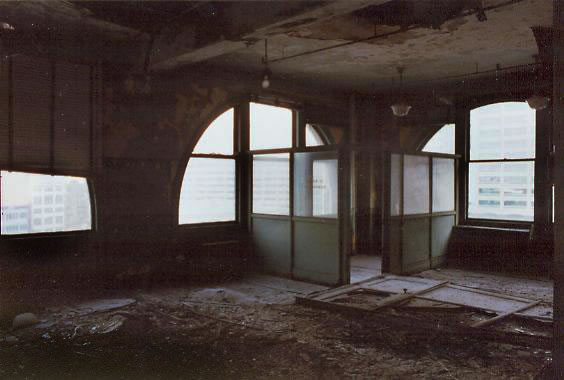

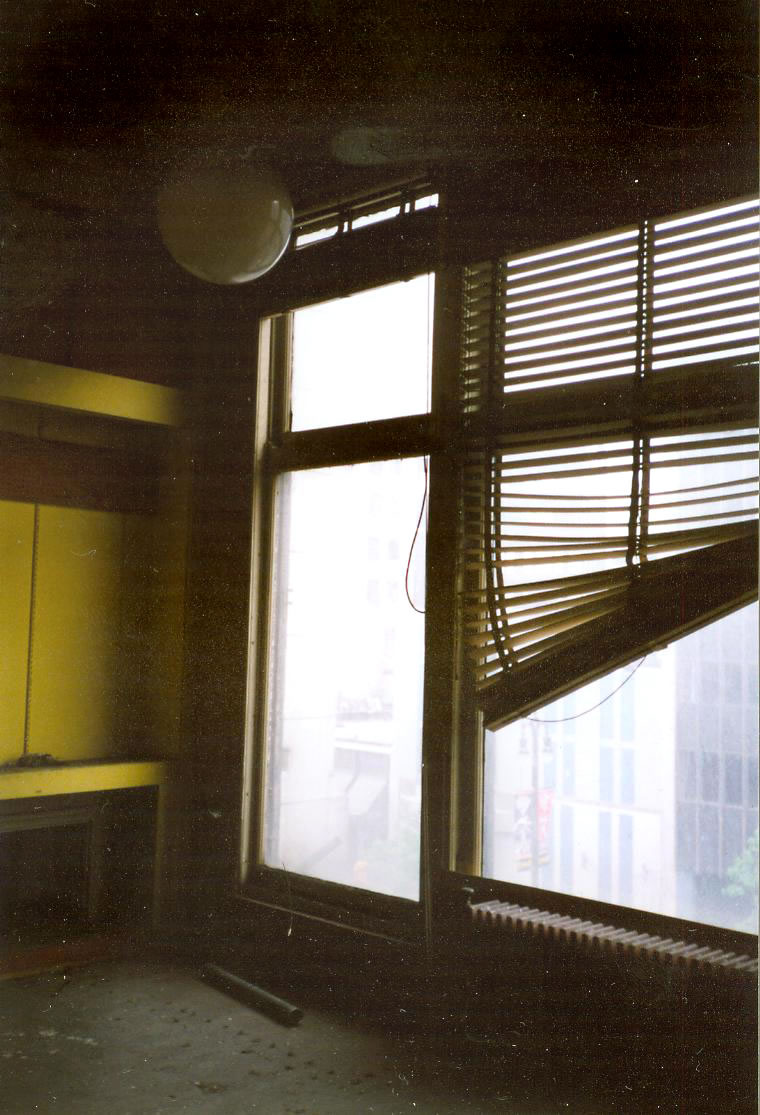
Almost all the vintage light fixture globes were intact:
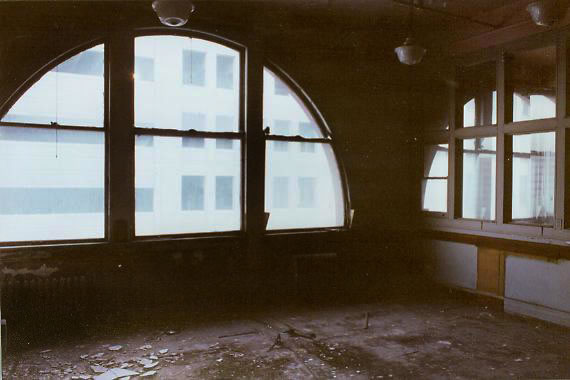

Here you can see the steep drop from the roof of the Valpey Building to the roof of the Elliott Building:


...as well as the faded remnants of some old ghost signage. View to the semi-vacant Clark Building:


See if you can spot the vintage TURDL tag below...
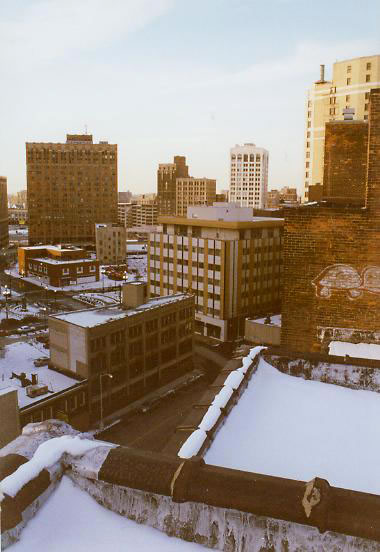
 

The age of this building really showed through in the construction style; I think it's the oldest building on Merchants' Row, though it was obviously renovated since 1894. Kresge's had moved into the Elliott Building in the late 1910s and stayed until the 1960s. They took over the bottom two floors by 1931, and conducted an extensive "modernization" in 1939 (which included the installation of an elevator). This was where Sebastian Kresge got his business started before expanding out to other buildings, and eventually turning "K-Mart" into a huge corporation, giving birth to the modern day "dollar store."
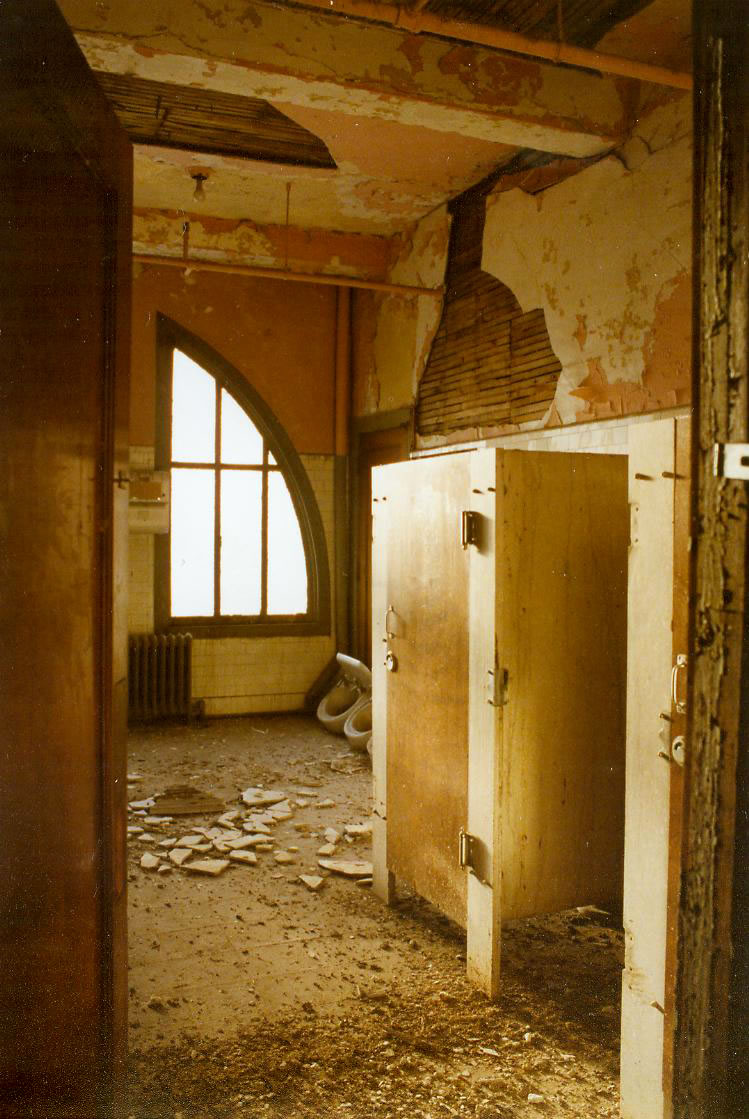

The last tenant of the Elliott Building was Eastern Wigs, in 1997.

*   *   *

Lane-Bryant got its start in Detroit. They started up in 1916—at the Washington Arcade Building—before moving to 1452 Farmer Street in 1922. By 1945 they had stores across the country, and were looking to relocate their flagship store yet again, to the Woodward Arcade—which they remodeled in 1946 with the help of noted Detroit architect Charles N. Agree, into the big grey art-moderne thing you see on the left here:


Lane-Bryant vacated this building in the 1980s. Agree also did similar facade "modernizations" for Winkelman's and Federal's department stores in the city.


We didn't hold much in the way of expectations for this one, as we could plainly see from the exterior and our peerings into its windows from other nearby buildings that it promised little in the way of excitement. Nonetheless it was new to us, and therefore good. It also gave access to the roof of the vacant United Foundation Building building next-door at 1528 Woodward:


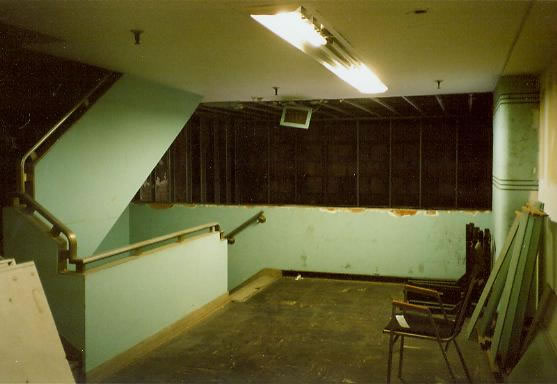
Interior was pretty typical....


If I'm not mistaken, Lane-Bryant was founded here to market clothing designed for them thick women, eventually nationwide. Because not everyone is a size 2.

Ooooh, bargain basement!!


*   *   *

At some point somewhere around Stupor Bowl XL, I made a solo trip into the Singer Building at 1414 Woodward Avenue. It's the super-skinny five-story one here on the left:
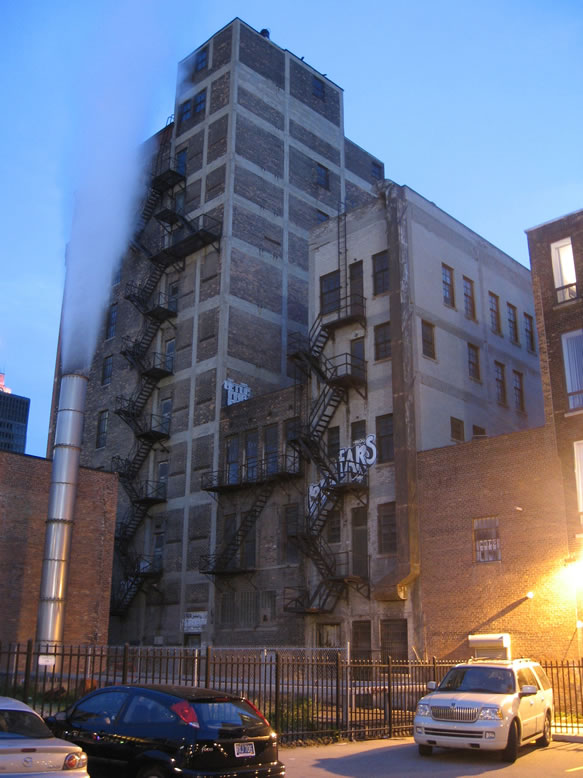
As one might imagine, fire escapes work both ways. 'Nuff said.
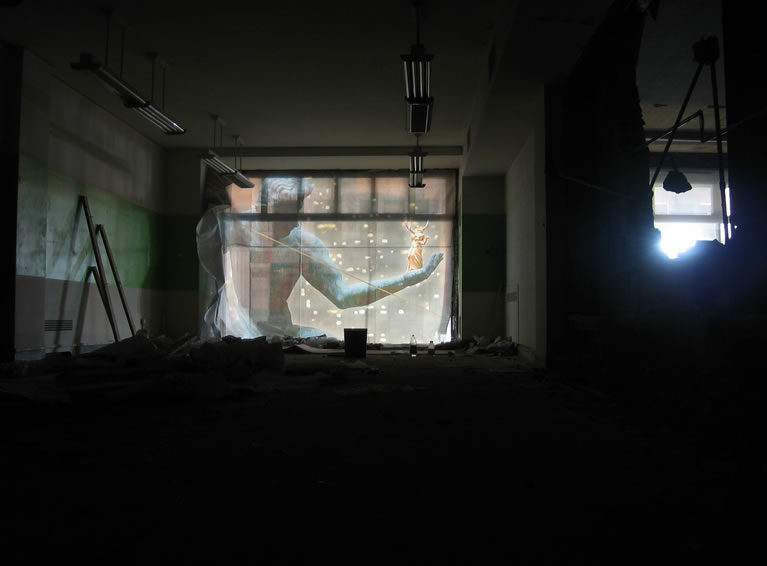
I nearly tore an abdominal muscle pulling myself up, but it had to be done. Some genius had swiped one of those fancy Spirit of Detroit fence screens designed go over the fences placed around abandoned buildings to hide our blight from the tourists, and hung it in the window. Backlit, it looked pretty neat:


The Singer Sewing Machine Co. Building was a latecomer to Merchant's Row, having been built in 1936. It however holds the distinction of having been designed by Detroit's venerable Smith, Hinchman & Grylls—who just so happen to be America's oldest continually operating architectural firm at the moment. They got their start only two years after the Singer Sewing Machine Co. itself—who have been around since 1851. Singer built their first factory in Detroit in 1904, and from this beanpole of a building sold their machines, patterns, and fabrics.

Singer's connection to Detroit originated however when Connecticut native Isaac M. Singer was still trying to make it as an actor in 1849. Actors in those days were probably natural costume-makers by trade, and while Mr. Singer was performing here in Detroit he heard the news that Elias Howe had invented a sewing machine. Singer was so convinced that he could build a better sewing machine that he quit acting and went home to Bridgeport to invent one of his own.

Also of note, Walter E. Flanders—a production manager who in 1907 helped Henry Ford set up his first assembly line for the Model T—got his early manufacturing experience from working at the Singer Sewing Machine Co. plant in New England.

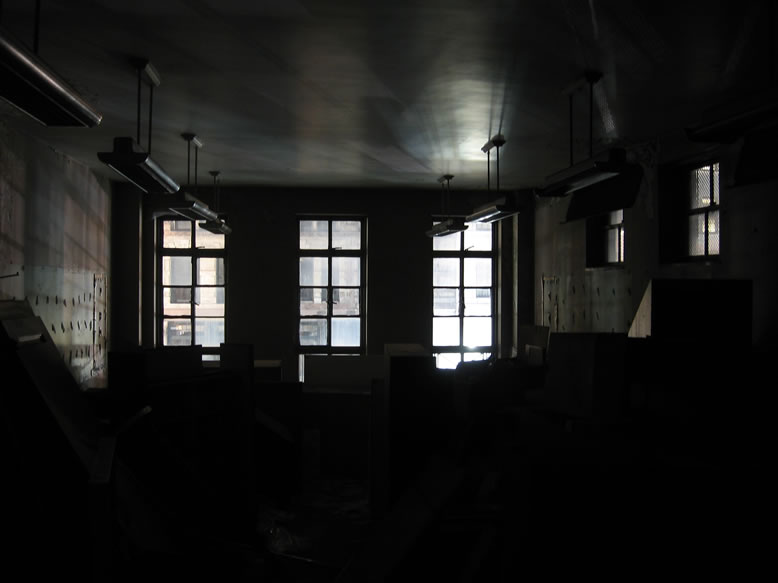
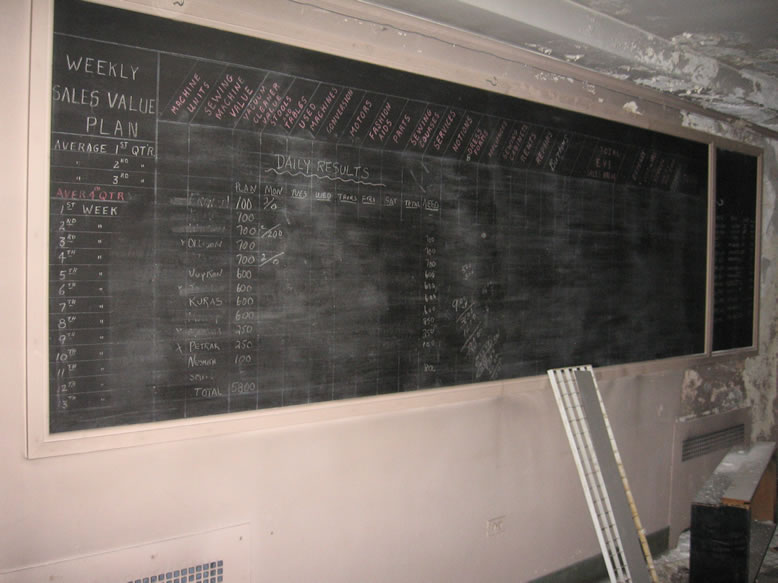
Again, there wasn't much of interest in this tiny building, but it was obscure and had to be done. A chalkboard with their sales figures...

Well, okay, I guess there was an actual Singer sewing machine in here too:
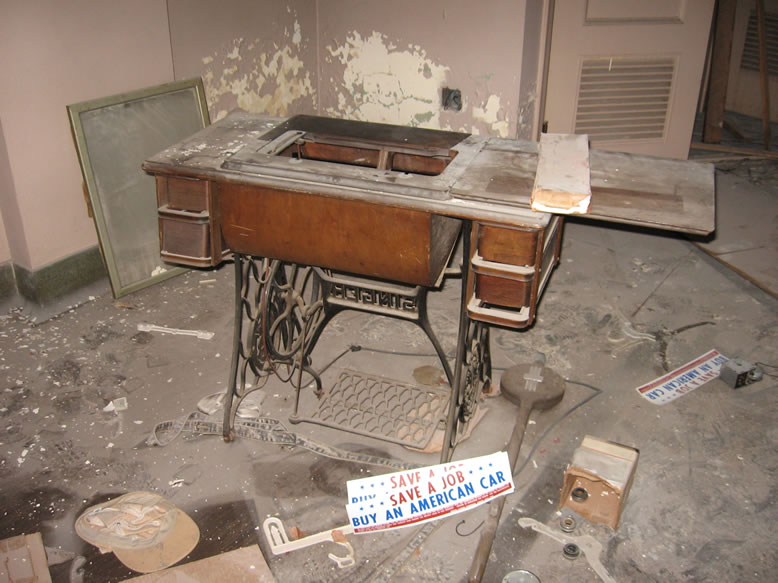

...and some cool 1980s bumper stickers.
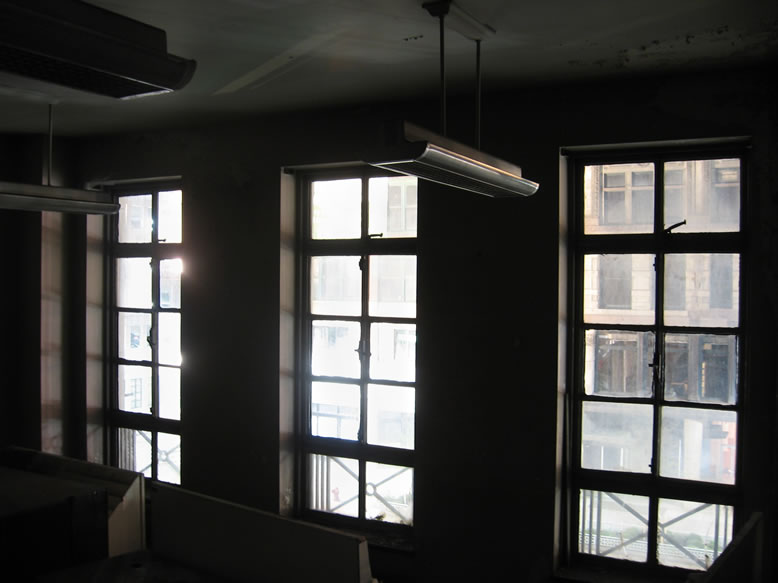

Talk about a narrow floorplan...could you imagine someone building something like this today?
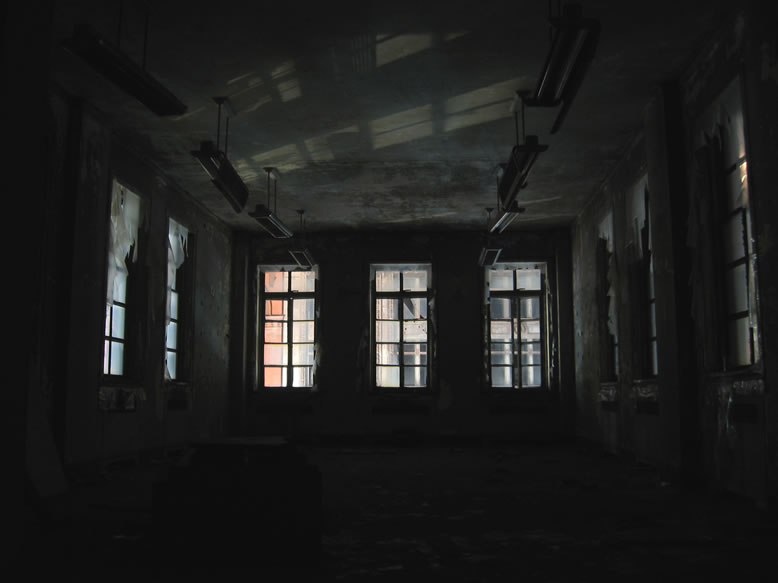

Decent little rooftop though:


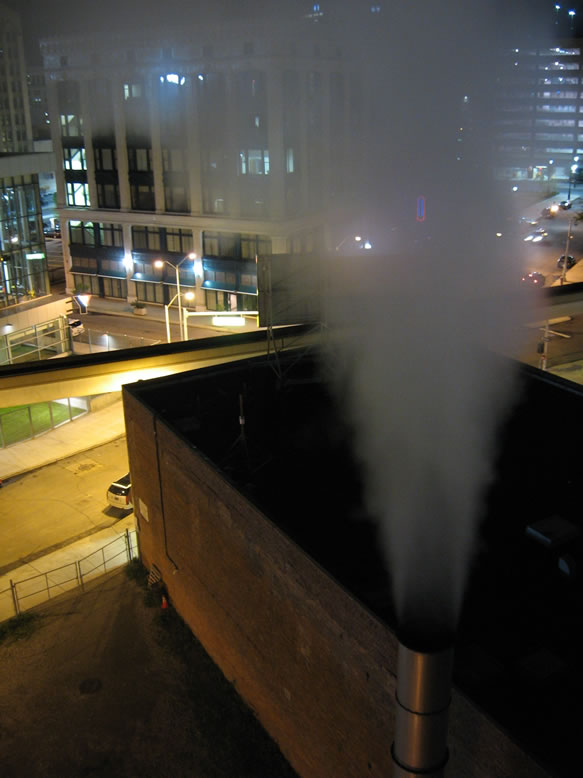
That damn steam outlet blurred out pretty much everything else:
Woodward could stand to be rolled up for the night:
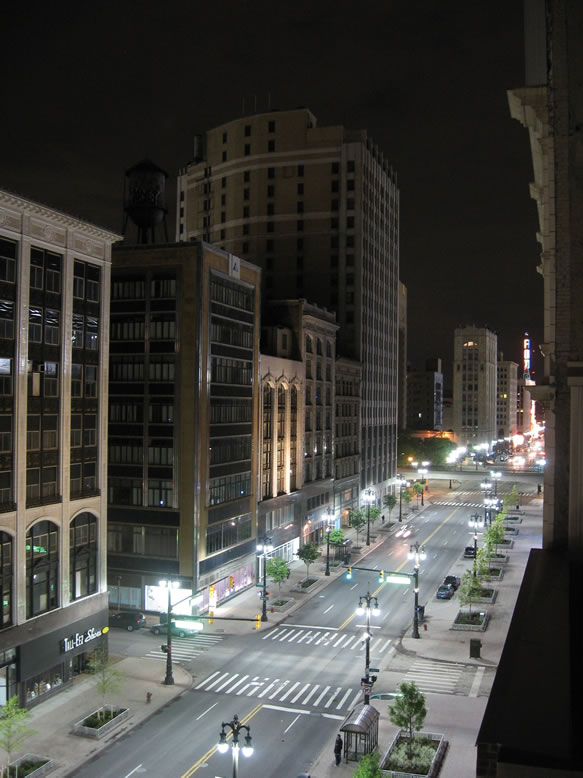

As of 2017 I believe all of the buildings featured in this post are being renovated or are already reopened, and the only time Woodward can be seen that devoid of people is on the night before the Thanksgiving Parade when it's closed off.


References:
Lower Woodward Avenue Historic District Final Report
AIA Guide to Detroit Architecture, by Eric Hill & John Gallagher
All Our Yesterdays, A Brief History of Detroit, by Frank B. & Arthur M. Woodford, p. 233-234
American Odyssey, A History of a Great City, Robert Conot, p. 145-146

Rooftop Movie Chase Scene

Written in 2005, before this part of downtown was completely fixed up or there was even any hope of renewal. So as always, take this for what it is—a retro-ish look at downtown’s resurgence. Photos are from 2004-2006, some scanned from 35mm prints.

Along Woodward between Grand Circus Park and Kennedy Square is your typical line of office and retail blocks from the late 1800s and early 1900s, colloquially known as Merchant's Row. They range from five to ten stories in height, and by the early 2000s, most of them were abandoned.
 

Sometimes four, five in a row stood dark and silent. These blocks used to house department stores in the heydays of downtown shopping, when one walked down a street instead of through a mall to purchase the sundries that improved one's quality of life. Until recently they were a sad reminder of what once was, a row of tombstones memorializing the past vitality of Detroit's downtown scene. Merchant's Row also used to be called the "Ladies' Mile," back in a more gilded age.

From left to right, the Woodward Building, Pierson Building, Grinnell Building, and Fisher Arcade:


Where streets were once packed with bustling shoppers, there was for three decades a ghost town where people are not found after dark—even on warm Saturday nights. A couple storefronts bore smashed-out windows that haven't been fixed in several years. Those buildings that do have struggling wig shops or shoe stores or whatever are usually only occupied on part of the first floor, leaving the upper floors vacant, and after closing time the storefronts are covered by roll-down doors.

This next shot was taken from the Broderick Tower:


This is the Valpey Building, which if you remember the sign on the big 1950s facade cladding, was last occupied by Pepper's Shoes...I took this photo the day they finished stripping the facade (because it left a small hole on the second story for me to climb up into, hahaha):


The Valpey Building was built in 1896, designed by Detroit architects Donaldson & Meier, who also designed the Stott Building.

One of the Merchant's Row buildings (Joy Fashion) was demolished around 2005, and replaced by a parking garage, while some others have been renovated into lofts, in hopes that people might soon move "back" into downtown. At the time I had no confidence that it would ever become trendy to move into downtown Detroit, but how wrong I was.


I always dreamed of roof-hopping from one abandoned building to the next, almost like being in one of those police-chase movie scenes, going from building to building without ever having to touch the ground. There is something about hanging out on downtown roofs that just has a certain romance to it...there you are, looking down on everyone and everything else, standing amongst the most beautiful architectural details of the city—details that every other schmuck in town has to look up to see.


The Grinnell Bros. Building stood between the Pierson Building (currently in use by Michigan National Bank) on the corner of Clifford & Woodward, and the abandoned Fisher Arcade. Both were eight stories tall, while the Grinnell stood only seven stories. On the other side of the Fisher Arcade was the seven-story Washington Arcade, long occupied by Himelhoch's--the last non-abandoned holdout for much of Woodward.

The beautifully beaux-arts Grinnell was designed in 1908 by Albert Kahn, and faces the abandoned Lane-Bryant Building across the street...


...Every single building visible in that shot was vacant at the time.

We had recently been inside the Lane-Bryant, and while staring across at the Grinnell, I vowed to get in there one day soon. The Grinnell Bros. company made high quality pianos back in their day, and this was their showroom and store, similar to Wurlitzer's. They sold their pianos and other musical instruments, but eventually went out of business with every other department store downtown. I even once found a Grinnell piano sitting in the abandoned Ypsilanti State Hospital.

The Fisher Arcade, built in 1912, also designed by Albert Kahn:


This is the Elliott Building, built in 1894:


The Elliott Building was supposedly the site of the first "five & dime" store opened by Sebastian Kresge in the late teens, who later went on to found everybody's favorite national chain, K-Mart...which was also the genesis of the concept for the "dollar store," according to detroit1701. By 1931 Kresge's had two whole floors of this building, and remained until the late 1960s.


Being that the front of your typical Merchant's Row building is actually well-sealed, I knew the only hope I had for gaining entry was the alley in the rear. Perhaps we could find a weak door or a window to crawl through. What ended up happening one sweltering summer’s evening was Chisel and I found a section of fencing laying in the alley, and we used it as a ladder to reach the fire escape of the Pierson Building, which was “somewhat-active,” housing the Michigan National Bank.


Once we climbed to the roof of the Pierson, it was a simple matter of hopping down onto the roof of the abandoned Grinnell. From there we could also get on the roof of the Fisher Arcade, and similarly, Himelhoch's. 

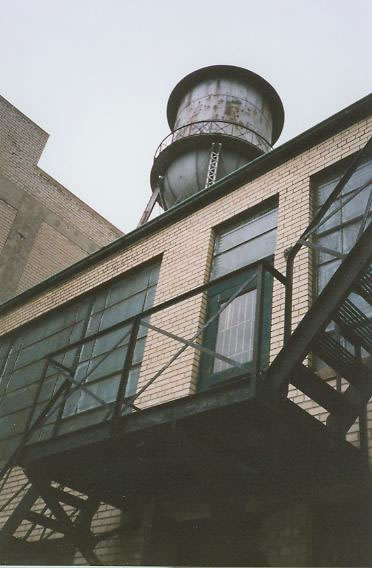
The watertower of the Pierson Building bore a huge EGGS mural, so I was not surprised when we got on the roof and found several wobbly old wooden ladders laying around, making it easier to get from one roof level to another. Entering a building from the roof is usually no sweat; we went in through a service penthouse window and explored from the top down.

Despite having mostly intact windows, this place was infested with sky-rats, and reeked of their droppings.

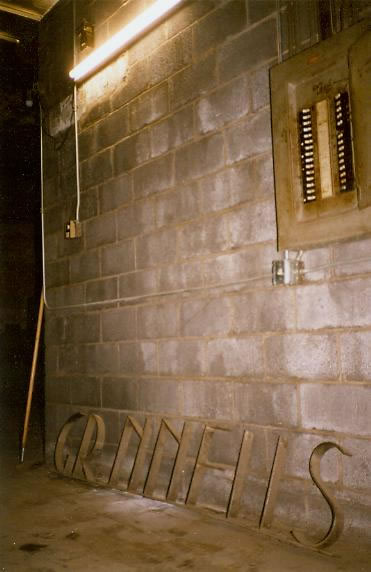
Chisel and I crunched across the floor of the upper-maintenance level of the Grinnell, finding a dumbwaiter and several pieces of outdated implementia, such as an encryption machine from ages ago that was still in great shape. There were also several stacks of papers, tags, and envelopes with the Grinnell name on them, indicating this building's address was 1515 Woodward. It’s fascinating to think that such a "low-number" address is abandoned real estate now…such a "prestigiously low" address would have sent and received tons of mail back in the day (or in any other city). However, the Detroit post office hasn’t handled mail for that address in about two decades…amazing.


Moving down to the main floors, we discovered to our surprise that the Grinnell was not separated from the Fisher Arcade by a wall—the two were connected and we could walk freely between from one to another. How handy! The Fisher Arcade was designed by Albert Kahn and opened in 1912, by one of the heirs to the Fisher Body empire, brother Maxwell. In 1948 it was renovated for occupation by Sanders Confectioners, and expansion by Grinnell Music--who eventually took over the whole Fisher Arcade by 1963--explaining why the two buildings were now connected.

The Fisher Arcade also played a part in the Manhattan Project to develop the first nuclear bomb. A handful of Detroit companies were developing parts or materials for the project, including Chrysler. According to local history buff "MikeM," the project required extreme secrecy, "so where did they maintain an office to manage it? In a vacant department store at 1525 Woodward," which is the Fisher Arcade. Company president K. T. Keller was driving by one day and saw a sign advertising space for rent in the building, with a war bond office on the ground floor. Keller decided to rent the upper floors of the building for Chrysler's Manhattan Project team to work in secrecy, with the war bond office as a cover.


There wasn't a whole lot in the way of "stuff" up here, but several walls were graced by some most excellent photo-mural wallpaper of the type that was popular in the '70s. One was a panoramic shot of a concert at Cobo Hall featuring well over a hundred Grinnell pianos of various sorts, and another was of the Detroit skyline, pre-RenCen. There was also one of those old school pneumatic message-tube systems. Here was the hub:


One thing we did notice was that this place was unmolested. Sure, it was dirty from being out of use for so many decades, but it was untrodden by the foot of the mischievous teenager; thus, vandalism was not present, nor was large-scale scrapping. Access to this place has always been obscure and difficult, and I wanted to keep it like that, so when we got down to the front doors of the place and realized we could simply unlock them and leave out that way, we did not.

 Instead, we chose to leave it locked and go all the way back out the hard way.


The floors in this place were odd; due to the slightly staggered arrangement of floors between the Grinnell and the Fisher Arcade, there were ramps or staircases when you moved from one into the other, and they alternated between wooden and concrete. Some of the ceilings were very low, and there was even a mezzanine near the top, resulting in a "seventh-and-a-half" floor. Only the top halves of the two buildings connected, however—once you got down past about the fourth, they were two separate buildings again.

Another mind-boggling feature of this pair of "Siamesed" buildings was their completely random assortment of stairwells, something the Statler Hotel's mystifying setup; there must have been five of them, each of a different style, and exactly none of them ran the entire height of the building.


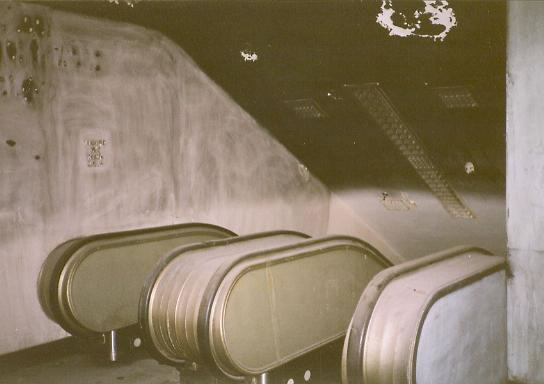
And throw an escalator in too: 


The main stair in the Fisher Arcade was a styled beaux-arts creation, with wrought iron topped by marble slabs:


The lower floors had some wild and pukey color schemes...bright yellow on maroon, blue on purple, brown and purple, glittery wallpapered columns...it represented the worst the '70s had to offer. But the overall condition of the two buildings was excellent. Despite some water damage, these buildings be restored easily. In fact, at some point there was apparently some resto work being started on the main floors of each, as the power was on, and they had been stripped out. I eagerly searched the basement for access into Detroit's steam service tunnels, which I knew once brought heat into these buildings along Woodward, but with no luck. It seems one can no longer access the tunnels directly from buildings' basements, probably for security reasons.


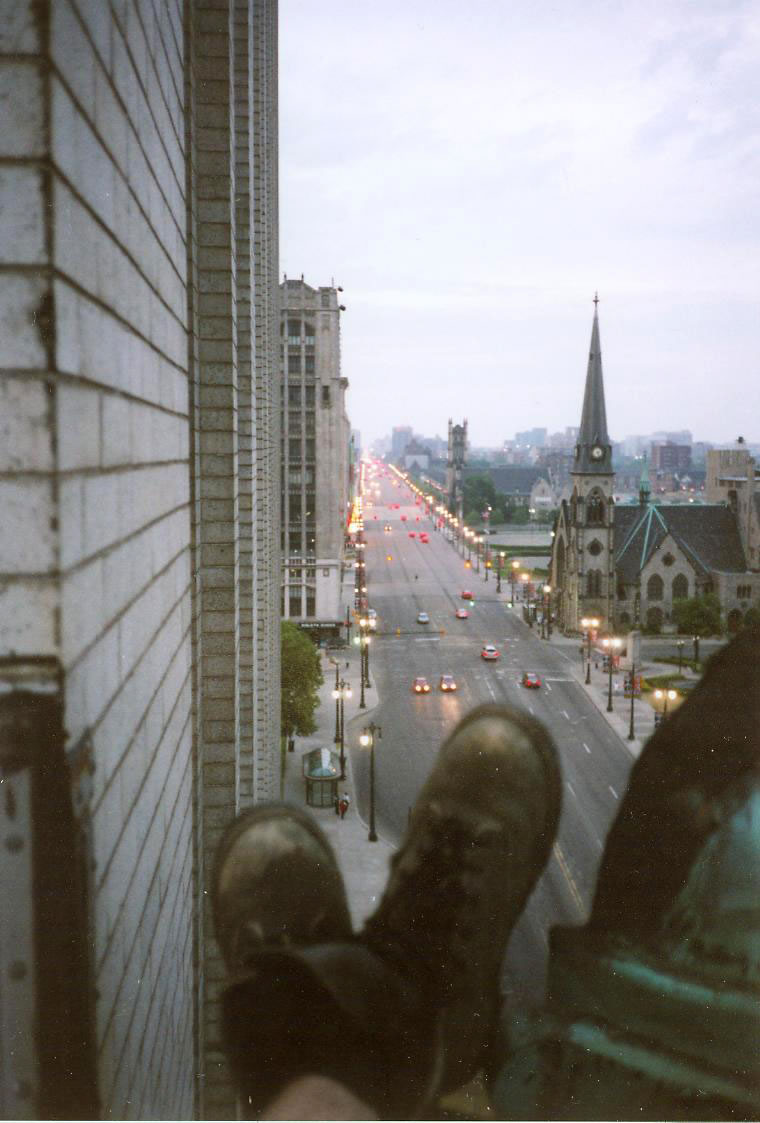
Dusk was falling, so Chisel and I headed back up to the rooftops for some more pictures. I wanted to climb the watertower, which rose another 50 feet or so off the roof of the Pierson Building. It provided a beautifully unique view of the skyline, and I even managed to goad Chisel into coming up too (normally he was afraid of heights). From here we could see showers of sparks from workers with torches still hacking the Statler's remains apart—even on a Sunday evening in June, they had those bastards working double-time.


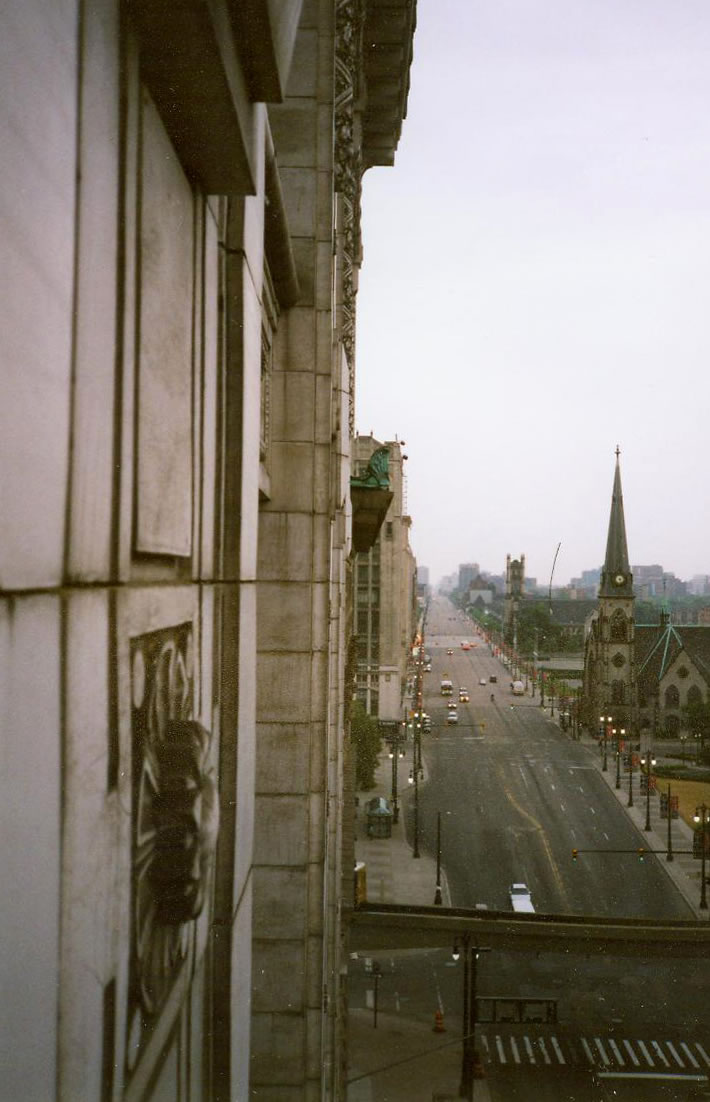
Next, we ventured over to the Himelhoch's roof, a building which spanned the distance between Woodward on one side of the block, to Washington on the other; it occupied the entire space directly behind the Whitney. From here, I could get nice close-up pictures of the fine terracotta work of the Fisher Arcade’s facade. This is what I live for.


Such ornamentation is so obsolete nowadays that it is almost mysterious to behold. I was also able to make out the words "FISHER ARCADE," painted on the north side of the building...the sign had faded over the years, but still showed. Himelhoch's had two light courts running down its center. It was currently fully occupied by senior citizen apartments and first-floor retail.

On its roof I found another bullet, just like I had on top of the Metropolitan Building. This one was from a .30-caliber rifle—again, most likely fired by some random partier on New Year's Eve, which then soft-landed on the Himelhoch's roof here. Now ask yourself, how many times in your life have you have found a soft-landed bullet laying anywhere...what are the chances?" In a space of one year, I have personally come across two in Detroit that I know of, within a one-block distance of each other. I've found two others stuck in roofs since then.

Here's a view of the old "FISHER ARCADE" ghost ad, viewed from the Whitney Building (on a different night):


Before leaving we decided to check out the in-use Pierson Building’s upper floors briefly, seeing as we noticed that the door to the stairs was actually open. We moved in slowly, looking for alarms and sensors, sweating our f%$#ing asses off in the heat of the elevator room. It was now about 10pm, and the temperature outside was still about 80F...what a day to pick for this crap.  We went down floor by floor, and when we poked our head into the 8th and 7th, there wasn’t much to see. A short, boring corridor of offices, a water cooler, a punch-clock with timecards dated to a few hours ago, and a bathroom that I stopped in to drink out of the sink like a horse. We were careful not to leave fingerprints anywhere.


All of a sudden when we pushed open the door to the 6th floor, a burglar alarm started blaring...

We instinctively booked the hell back upstairs, out onto the roof, back down the wooden ladder (before pulling it down behind us so we couldn't be followed), and into the Grinnell. We were going to try going out a backdoor to the alley that I saw earlier, but after we had climbed all the way down there, we found it to be padlocked! So I decided I would let Chisel out the front door to get the car ready, lock it behind him, then run back up all seven flights of stairs and take the fire escape back down to the alley. Chisel walked out the front of the Grinnell and back to his car while I chugged breathlessly back up the stairs. Without taking a single break, I made it back to the roof, immediately set back up and climbed the wobbly wooden painters’ ladders to get back on top of the Pierson, and took its fire escape back to the ground. Without stopping, I went over the edge. I was soaked with sweat and feeling lightheaded, but my resolve remained sharp. Hoofing it down the steel fire escape, I stopped halfway when I felt my silenced phone go off in my pocket. I figured it was Chisel, so I answered. He warned, "Dude—don't come down here—there's cops."

I was half amazed that the DPD even showed up, but nonetheless I opted to go back up in the building and lay low in case they shined the fire escape. I turned my ass around and started running back up. By this point I was feeling lactic acid-buildup in all my muscles, causing a soreness that burned in my legs, back, and arms. Sweat was gushing off my face in sheets, and I could hardly breathe due to the intense humidity. It was a damned good thing I was in fairly healthy shape, because this was a flog I was not certain I had ever endured. Roof-spider webs clung to me all over, and my hair was frizzing-out like a madman's. As I got back near the top, I found I was having a hard time controlling my legs. They were so fatigued that I was starting to wobble and shake from all the running up stairs and ladders. Thankfully I was wearing shorts and not pants that day.

As I got back to the roof of the Grinnell, I knocked the wooden ladder to the ground behind me, collapsed near the ledge and called Chisel back, panting, to inform him that I was gonna hang there for about 10 minutes and see what happened. I just hoped there was no night watchman in the bank who might come up here after me…though I should be awfully safe now since I took the makeshift ladder down. If worse came to worse, I could easily hole-up in one of these buildings and never be found (unless they brought dogs, but chances of that or of police even searching more than the Pierson Building were extraordinarily low). I took off my greasy glasses and wiped my boiling face with my already soaked shirt. Then I realized there was a big ol' spot of fresh pigeon shit right in the middle of it. Nice.

But I couldn't even care about that at this point. My rubbery body now swimming with a combination of nausea, tunnel vision, and what might’ve been “runner’s euphoria,” I peered over the ledge to see the front of the Pierson Building, but no cops were in sight. Chisel told me that the coast was clear now, and asked if I had seen them light up the building. Apparently they had briefly swept their car's spotlight on the building. I figured I might go out through that front door after all, instead of being shined while climbing down the fire escape of the bank that we had--for all intents and purposes--just attempted a burglary on.

I sat and waited for awhile, catching my breath, and still no cops were in sight. When I called Chisel back, he was in his car now, and said he'd park within view of the fire escape, honking his horn if there was trouble. I told him I was on my way back down. I ran down the fire escape as quickly as I could without stumbling on my now feeble legs. This was at least my fifth trip up or down the damned seven-story building since we had set off the alarm 15 minutes ago (if you've been keeping track). I saw Chisel parked with his lights off. It was so hard to breathe in this sweltering summer weather that it felt like the air was hot, moist cotton clogging up my lungs.

By the time I got to the bottom, I could barely grip the damned fence-ladder, and when I tried to pull it down and stash it off to the side again, I nearly crushed myself under it. I got in Chisel's car and we peeled the f#$% out, home-free. I was so covered in sweat that even my backpack was wet all the way through. My entire body was shaking from overexertion and the pit of my stomach was on fire, due to not having eaten a damn thing all day. Chisel looked over and asked if I was okay...I replied that I was just having a Zen moment, and then proceeded to devour some stale Burger King from a bag on the floor of his car.